How Long Can You Stay in a Car with the Windows Closed?
We sit in our cars with the windows closed more often than we notice. You might be waiting for someone in a parking lot, hiding from a storm, or fighting sleep on a long highway run. In those moments, the car feels like a safe bubble.
But a closed cabin can turn risky faster than most people think. Heat, poor air quality, and even carbon monoxide turn that “bubble” into a trap if you stay too long or use the engine the wrong way.
This guide explains how long you can safely stay in a car with the windows closed, what changes inside the cabin, and what you can do to protect yourself and the people you love. We will look at temperature, air quality, health issues, and real safety limits, not guesses.
If you are also thinking about upgrading to a safer, newer vehicle with better safety tech, you can look at options like a reliable used SUV, but even the best car still obeys the same basic physics inside a closed cabin.
Is It Safe To Stay in a Car with the Windows Closed?
Staying in a closed car for a short time is usually safe for a healthy adult in mild weather. Cars are not perfectly sealed. Small gaps around doors and vents let some air move in and out. That slow exchange stops you from “running out” of oxygen in a few minutes.
The real trouble starts when you stretch that stay, when the sun is strong, or when the engine is running. Heat builds fast. Exhaled air changes the gas mix inside the cabin. If exhaust ever leaks in, the risk jumps from “uncomfortable” to “life-threatening.”
So the honest answer is simple: it can be safe in small doses, but the safe window is shorter than most people assume, especially for kids, pets, and people with health issues.
How Car Cabins Let Air In and Out
A modern car feels sealed when you shut the doors, yet it still leaks a bit of air. Vents, door seals, and tiny gaps allow slow air exchange. That is why cabin air does not stay fresh forever, but it also does not turn into a vacuum.
This slow leak means oxygen levels drop very slowly. You will feel “stuffy” and tired from rising CO₂ long before you face true oxygen starvation. That is your built-in warning sign to get fresh air.
Short Rest Versus Prolonged Stay
A quick 10–20-minute stop with the engine off and mild weather is usually fine for a healthy adult. You may feel a bit warm or sluggish, but the risk level is low.
Stretch that sit to an hour or more, and the picture changes. On a warm day, the cabin can move into dangerous temperatures. Air quality slips. You may develop a headache, feel heavy and slow, or fight sleep. Those are not just comfort problems. They are safety warnings.
The same time frame becomes much riskier if the person is a child, an older adult, or someone with heart or lung disease. Their bodies handle heat and bad air poorly, so the safe time is much shorter.
Health Conditions That Make It Riskier
Some people should treat a closed car as a short-use space only. This group includes:
- People with asthma or other breathing problems
- People with heart disease or high blood pressure
- Pregnant women
- People who react strongly to heat or stuffy rooms
- Anyone on medicines that affect circulation or breathing
For them, even 10–15 minutes in a hot, closed car can trigger dizziness, chest tightness, or panic. Add high humidity or stress, and the strain on the body climbs fast.
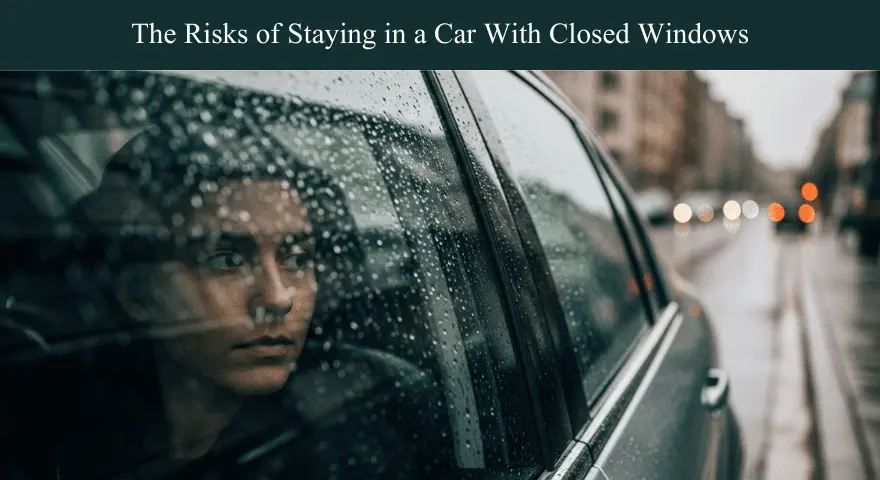
The Risks of Staying in a Car With Closed Windows
Staying in a closed car too long hits you from several sides at once.
First, temperature inside the car climbs faster than outside, even on a “nice” day. Second, the air you breathe out builds up as carbon dioxide, which makes you tired and dull. Third, if the engine is running and anything is wrong with the exhaust, carbon monoxide becomes a hidden threat.
Rapid Temperature Increase
Even if the weather feels comfortable when you park, the sun can turn the cabin into an oven in minutes. Dark dashboards, seats, and glass trap heat and bounce it around. You may still feel okay at first, then suddenly feel flushed, sweaty, and weak. That shift can happen faster than you think, and children or pets can reach a crisis state even sooner.
Poor Air Quality and a Stuffy Cabin
While you sit, every breath adds more moisture and carbon dioxide to the air. The cabin starts to feel heavy and stale. You might yawn, rub your eyes, or struggle to focus on your phone or the road ahead when you start driving again.
That “stuffy car” feeling is your early warning. Staying longer without fresh air only makes it worse.
Who Is Most at Risk?
The highest-risk groups in a closed car are:
- Babies and young children
- Pets, especially dogs
- Older adults
- People with heart, lung, or heat-sensitivity problems
Their bodies overheat faster and recover more slowly. For them, “a few minutes” can be all it takes for a simple wait to turn into a medical emergency.
Temperature Can Rise Dangerously Fast
Heat is the first and biggest danger in a closed car. Even on a “nice” day, the inside of the vehicle can jump from warm to dangerous in a very short time. The glass and dark surfaces trap sunlight and hold it. Your body has to fight that heat while also dealing with still air.
The Greenhouse Effect Inside a Parked Car
Sunlight passes through the windows and hits the seats, dash, and floor. These surfaces absorb the energy and then release it as heat. That heat does not escape well, so it builds layer by layer. This is the same basic effect that warms a greenhouse, but in a car the space is much smaller.
Temperature Risks in Hot Weather
On a hot or even mild sunny day, the cabin can rise by several degrees in minutes. What feels like a safe 75°F outside can turn into 95–100°F inside your car. As the minutes pass, your heart works harder, you sweat more, and your body slowly runs out of ways to cool itself. That is when heat exhaustion and heatstroke start to creep in.
Hot Weather Dangers for Kids, Pets, and Vulnerable Adults
Children and pets heat up much faster than healthy adults. Their bodies are smaller and lose water quickly. Older adults and people with health problems also struggle to cool down in time. For them, a “short wait” in a hot, closed car can turn into an emergency in under half an hour.
Real-World Data: How Fast a Car Heats Up
Tests on parked vehicles show the same pattern. The inside temperature can jump 20°F in the first 10 minutes. After 30 minutes, it can pass 110°F on a warm day. Once the cabin gets that hot, your body is fighting both the heat and the heavy air. It does not take long before thinking, vision, and movement slow down.
Cold Weather Concerns
Cold weather feels safer, but it comes with its own set of risks. Your car blocks wind and snow, which helps, yet it does not hold heat for long once the engine is off. A closed cabin in winter can shift from “cozy” to “freezing” while you sleep or wait.
How Quickly a Car Loses Heat in Winter
When you switch the engine off, the heater stops pushing warm air. The glass and metal body lose heat to the icy air outside. Within a short time, the cabin temperature drops close to the outside level, especially at night. You may not notice it at first, then you wake up shivering.
What About Sleeping in a Car During Cold Weather?
In a winter traffic jam or storm, sleeping in the car may be your only option. That choice is understandable. But you still have to manage heat and air carefully. Relying only on the engine and heater the whole night is not safe, because of the carbon monoxide risk we will cover in the next part.
Hypothermia, Poor Circulation, and Frostbite Risk
As the cabin cools, your body starts to pull blood away from your hands, feet, and skin. This keeps your core warm for a while but raises the risk of numb fingers, toes, and even frostbite. If you cannot stop shivering, feel very tired, or start to mumble, those are signs of hypothermia. In that state, judgment drops fast.
Balancing Warmth and Ventilation Safely
The safest way to rest in a cold car is to dress in layers, use blankets or sleeping bags, and treat the engine as a backup, not the only heat source. Short engine runs to warm the cabin, with the tailpipe clear and some airflow, are safer than leaving it on all night. You still need a small crack in a window at times to keep air moving.
Air Quality: The CO₂ Buildup Factor
Even with no exhaust leak, the air inside a closed car changes as you breathe. You inhale oxygen and breathe out carbon dioxide. Over time, CO₂ levels climb and oxygen drops a little. You feel this change as “stuffy” air, pressure in your head, and a strong urge to yawn.
Air Quality Declines Over Time in a Closed Cabin
In the first few minutes, you may not feel much change. After 20–30 minutes, the air starts to feel heavy and warm. If you stay longer without any fresh air, your brain gets less useful oxygen with each breath. Thinking clearly becomes harder, even if you do not notice it right away.
CO₂ vs Oxygen – What Really Changes First
In most cars, oxygen does not crash to a deadly level very quickly. The bigger change is the rise in carbon dioxide from your own breath. High CO₂ tricks your body into feeling both sleepy and stressed. You feel tired, yet your heart may beat faster and your breathing may deepen.
Symptoms of CO₂ Buildup
Watch for these early signs that the air quality is slipping:
- Dull headache or pressure behind the eyes
- Constant yawning or heavy eyelids
- Trouble focusing on simple tasks
- Mild dizziness or a “floating” feeling
If you ignore these and stay longer, the symptoms can grow into real confusion and poor reaction time.
Multiple Occupants vs. Solo Scenarios
The more people inside, the faster CO₂ rises. Four people in a small car can turn the air stuffy in a very short time. A solo driver has more time, but still not unlimited.
Solo Naps and Short Waits
One healthy adult taking a short nap with the engine off in mild weather can often manage 30–60 minutes before feeling strong discomfort. Even then, it is wise to crack a window and take breaks.
Families, Kids, and Pets in a Closed Car
With several people or animals inside, the safe window shrinks. A family of four sitting with all windows closed may feel heavy air and sluggish thinking in well under half an hour. In hot weather, heat and CO₂ combine to make that time even shorter.
Oxygen Depletion: Myth or Reality?
Many people worry they will “run out of oxygen” in a parked car in a few minutes. In normal cases, that is not what happens. The cabin is small but not sealed like a jar. You will almost always feel sick from heat or CO₂ long before true oxygen starvation.
How Long Before You Run Out of Air in a Closed Car?
In most modern vehicles, it would take many hours before oxygen alone becomes the main problem. By that point, heat, cold, or carbon monoxide would likely have forced you out or made you very ill first.
Why True Suffocation Is Rare but “Stuffy” Comes Fast
Because cars leak a little air, suffocation is rare in open outdoor parking. What you feel instead is the mix of humidity, heat, and CO₂. That “cannot breathe right” feeling is real and serious, even if oxygen numbers are still technically safe.
Early Warning Signs You Should Not Ignore
If you start to feel heavy, sleepy, short of breath, or oddly anxious in a closed car, treat that as a warning. Open a door, step out, and get a few deep breaths of fresh air. Your body is telling you the cabin environment is no longer safe for a long stay.
Carbon Monoxide: The Silent Poison
Heat and CO₂ make you feel bad. Carbon monoxide can kill you without a clear warning. That is why sleeping in a car with the engine running is so risky.
Can You Get Carbon Monoxide Poisoning from Sleeping in Your Car?
Yes. If the exhaust leaks or the tailpipe is blocked, CO can enter the cabin. You will not smell it. You will not see it. You may only feel sleepy and weak, then never wake up.
CO Buildup Is Deadly and Happens Fast
CO attaches to your red blood cells and pushes oxygen out. Your heart, brain, and lungs starve even while you keep breathing. Early signs include headache, nausea, dizziness, and strange confusion. In a small car, a serious leak can turn deadly in under an hour.
How About When the Engine Is Off?
The risk is lower, but not zero. CO from other cars, heaters, or generators nearby can drift into your cabin, especially in snow, garages, or tight parking spots. You still need some airflow and awareness of what is running around you.
Preventing CO Buildup in the Cabin
You cannot see CO, so prevention is the only real defense.

Check the Tailpipe and Exhaust Before You Rest
If you must idle, look at the tailpipe first. Clear away snow, water, dirt, and leaves. If your car ever smelled like exhaust inside while driving, get the system checked before you trust it for rest.
Use a CO Detector When You Can
A small battery CO detector in the cabin can save lives. It will beep long before levels get high enough to knock you out. It is a smart tool for people who travel, camp, or live in their cars for any time.
Safe Use of the Engine in Hot and Cold Weather
Treat the engine as a short helper, not a life support machine. Run it in brief cycles, with the tailpipe clear and at least one window cracked, then switch it off and rely on shade, layers, or blankets. Never let it run while you are fully asleep if you can avoid it.
Ventilation Is Everything
Good air keeps you clear-headed and alive.
Why a Cracked Window Is Not Enough for CO
A small crack helps with comfort and CO₂, but it may not stop CO if the leak is strong. Do not rely on a tiny gap as your only CO safety step.
When Cracking Windows Still Helps
With the engine off, slightly open windows can slow CO₂ buildup and keep humidity down. Cross-ventilation (front-left and rear-right cracked) works better than a single small opening.
Better Ventilation Tools
Window visors, roof vents, and small battery fans improve airflow while keeping some privacy and rain protection. They are very useful for safe car camping when the engine is off.
How Long Can You Stay in a Car with the Windows Closed?
There is no single number for all cases, but you can use rough guides.
Safe Time Limits by Weather and Engine Status
- Mild day, engine off: aim for 20–30 minutes, then air out.
- Hot day, engine off: avoid more than 10–15 minutes, especially with kids or pets.
- Cold day, engine off with blankets: 30–60 minutes before a vent and movement break.
- Engine running, windows closed: avoid whenever possible; CO risk is not worth it.
CO₂ Buildup Timeline: A Quick Reference
One adult may start to feel stuffy after 30–60 minutes. Add more people, and the time shrinks. When anyone feels heavy-eyed, headachy, or dizzy, it is time to open doors and step out.
Sleeping in Your Car – Special Considerations
Pick a legal, well-lit area. Keep the engine off. Crack windows within what feels safe to you. Use a blanket, neck pillow, and an alarm so you do not sleep through hours of stale air.
Winter Storms and Being Stranded
Use your winter kit: warm clothes, blankets, food, water, and a CO detector. Run the engine in short bursts with the tailpipe clear, then turn it off and let your layers hold the heat. Vent a little when you can.
Safer Alternatives to Staying in a Closed Car
If you feel too tired to drive, a lobby, rest stop, or simple motel is far safer than a sealed car. Even a short stay inside a building with fresh air beats hours in a closed cabin.
Car Camping Gear That Helps
Window visors, privacy curtains, and vented covers let you open the glass more while staying hidden and dry. They turn “closed box” sleep into “vented shelter” sleep.
Legal and Safety Considerations
Some cities and states limit overnight car sleeping or street parking. Rest areas or truck stops are often safer and more accepted. Always check posted signs and local rules.
Basic Personal Safety
Choose bright, busy spots, lock the doors, and keep your phone charged. Let someone know where you are and how long you plan to stay.
Tips to Stay Safe and Comfortable
Before You Close the Windows
- Check the weather and your health.
- Clear the tailpipe if there is snow or mud.
- Set a timer so time does not “slip away” while you rest.
During Your Stay
- Crack windows if it is safe.
- Drink water.
- Shift position and move your legs often.
When to Leave Right Away
Step out and get fresh air if you feel dizzy, short of breath, very hot, very cold, or strangely anxious. Those are your body’s last gentle warnings.
Why It Matters in Your Daily Life
This is not just a theory problem. It touches school runs, grocery trips, road journeys, camp nights, and surprise storms. Knowing the real limits helps you protect kids, pets, and yourself without guessing.
Key Takeaways
- Treat closed cars as short-term shelters, not long-term rooms.
- Heat and CO₂ will bother you long before oxygen “runs out.”
- Carbon monoxide with a running engine is the real killer risk.
- Engine off, good airflow, and the right gear make car rest safer.
Bottom Line
How long can you stay in a car with the windows closed? The safest answer is: as briefly as you can. Use your car to pause, not to hide for hours. Fresh air, shade, and common sense will always beat a sealed cabin.
FAQs
For a healthy adult in mild weather, try to keep it under 20–30 minutes, then air out and move.
Yes, if CO from other sources or a recent leak collects near your car. The risk is lower, but not zero.
Total oxygen loss is rare in normal outdoor parking. You will feel sick from heat and CO₂ first.
Not really. Any exhaust leak or blocked pipe can turn that choice deadly, even if you crack a window.
It depends on local rules. Some rest areas allow it. Many city streets and lots do not. Always check signs and stay within the law.