Luther Vandross Car Accident: Full Story, 1986 Crash, Stroke, and Hidden Truths
When people search for “Luther Vandross car accident,” they are usually trying to solve a puzzle: was it the crash that ended his life, or something else? Over the years, headlines, rumors, and half-remembered stories have blurred the facts. What actually happened in 1986 is very different from the way many fans now remember it.
A Rising Star Before the Crash
Luther Vandross was already a respected R&B singer and producer when he stepped into that car in early 1986. One moment, he was celebrating new music and helping a young artist launch a career. Minutes later, he was at the center of a fatal collision that would haunt him for the rest of his life.
Why the 1986 Accident Still Matters
Understanding the full story matters for two reasons. First, it honors the person who lost his life in that crash and the people who were badly hurt. Second, it shows how quickly a simple decision behind the wheel can have consequences that no fame, money, or talent can erase.
If you have read detailed coverage like the Raniah Rowley car accident news, you already know how a single impact can shape families and reputations for decades.
This is not just a story about a famous singer in trouble. It is a careful look at what happened on Laurel Canyon Boulevard that night, who was in the car, why the crash was so severe, and how it changed lives on both sides of the steering wheel.
Full Details on the 1986 Luther Vandross Car Accident
Before the crash, the mood around Luther Vandross was upbeat. He had discovered a young singer, Jimmy Salvemini, whose voice impressed him so much that he agreed to produce his debut album, later titled Roll It. Vandross was not just lending his name; he was investing his time, skill, and industry connections to give Jimmy a real launch.
When the recording work on the album wrapped up, Luther, Jimmy, and Jimmy’s older brother and manager, Larry Salvemini, went out to celebrate. It was the kind of night that should have ended with tired smiles and plans for the future. Instead, it turned into one of the darkest chapters in Vandross’s life.
The Night of the Crash on Laurel Canyon Boulevard
On January 12, 1986, Luther Vandross was driving his convertible northbound on Laurel Canyon Boulevard, in the Hollywood Hills area of Los Angeles. It is a road known for curves, changes in elevation, and stretches where drivers need to stay sharp, especially at higher speeds.
Vandross was reportedly driving at about 50 miles per hour in a zone marked for 35 mph. On paper, that difference may not look dramatic, but on a narrow, winding, two-lane road, those extra miles per hour can be the line between a close call and a disaster.
How the Crash Happened: Crossing the Double Yellow Line
At some point on that drive, Vandross lost control of the car. His convertible crossed the double yellow center line that separates northbound and southbound traffic on Laurel Canyon. The vehicle turned sideways, putting the side of the car toward oncoming traffic.
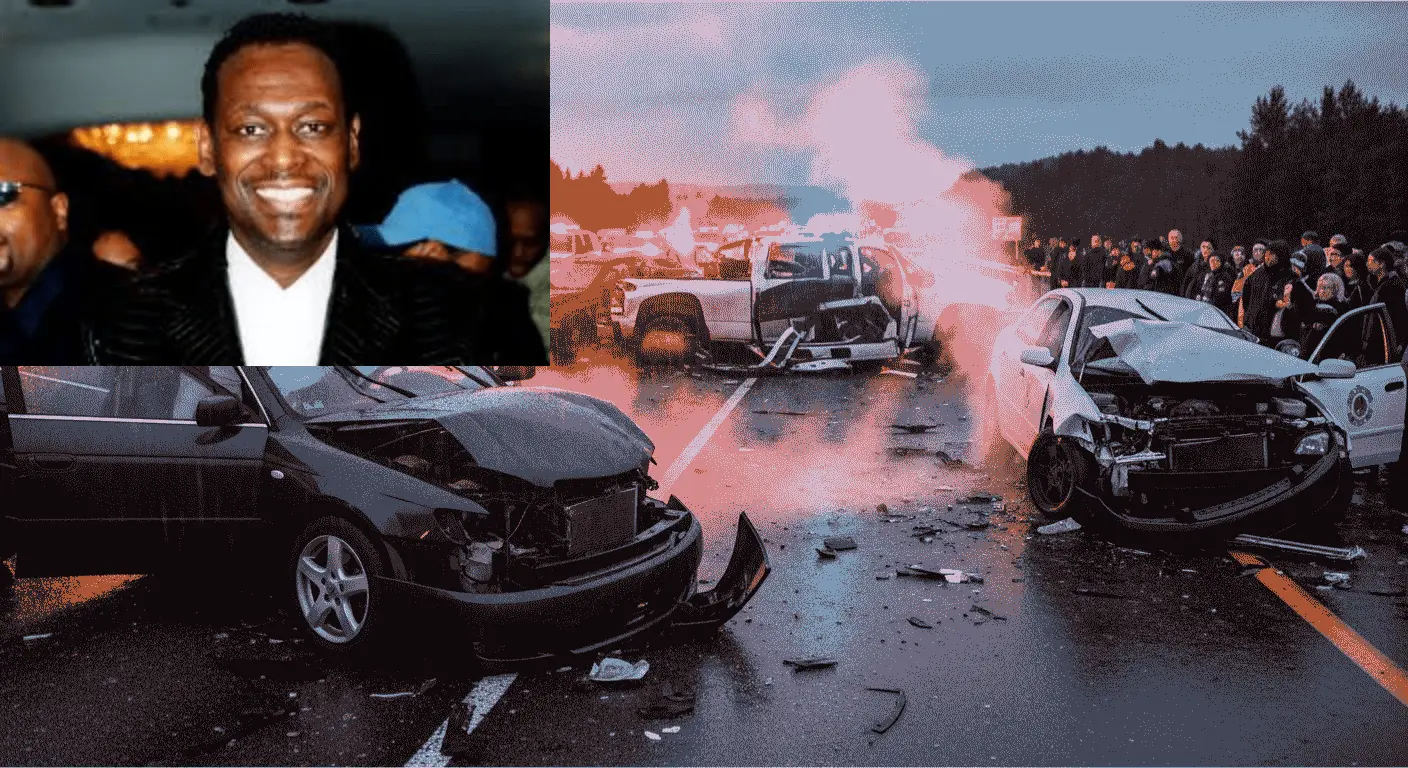
First, the car collided with a southbound vehicle. The force of that impact swung the convertible around again, causing a second head-on crash with another car coming from the opposite direction. In just a few seconds, what began as a celebration became a violent three-car collision on a busy Los Angeles road.
To make the basic facts clear, you can think of the crash like this:
| Detail | Information |
|---|---|
| Date of accident | January 12, 1986 |
| Location | Laurel Canyon Blvd, Hollywood Hills, Los Angeles |
| Vehicle driven by Vandross | Convertible (1985 Mercedes) |
| Posted speed limit | 35 mph |
| Reported speed of Vandross | About 50 mph |
| Number of vehicles involved | Three |
| Type of collision | Side impact and two head-on impacts |
This simple table shows why investigators focused so much on speed and lane position. A few extra miles per hour and a crossed center line created a chain reaction that several drivers could not avoid.
Who Was in the Car with Luther Vandross
The seating layout inside Luther Vandross’s car on that night added even more weight to what happened. In the front passenger seat sat Larry Salvemini, Jimmy’s brother and manager. In the back seat was Jimmy Salvemini himself, the young artist whose newly completed album they had just finished celebrating.
In the other two cars were ordinary drivers on their way through the Hollywood Hills. They were not part of the music industry, not heading to a party, and not expecting a celebrity’s car to slide across the double yellow line into their lane. For them, this was a sudden emergency, with no time to prepare and no way to step out of harm’s way.
Injuries and Immediate Aftermath of the Collision
The human cost of the crash was severe. Larry Salvemini, the passenger sitting next to Luther Vandross, was killed in the collision. His death later became the central element in the legal case that followed and in the emotional burden carried by everyone involved.
Luther Vandross suffered serious injuries: three broken ribs, a broken hip, bruising across his body, and multiple facial cuts. In the back seat, Jimmy Salvemini was left with cuts, bruises, and contusions but survived. Both Luther and Jimmy were rushed to Cedars-Sinai Medical Center for emergency treatment, while the occupants of the other vehicles were taken to nearby hospitals.
In a matter of moments, a promising night in the studio turned into a scene of twisted metal and flashing lights. Medical teams worked urgently to stabilize several injured people. That night on Laurel Canyon Boulevard would follow Luther Vandross for the rest of his life, long after the broken bones healed and the headlines faded.
Singer Luther Vandross Hurt in Crash; Rider Dies
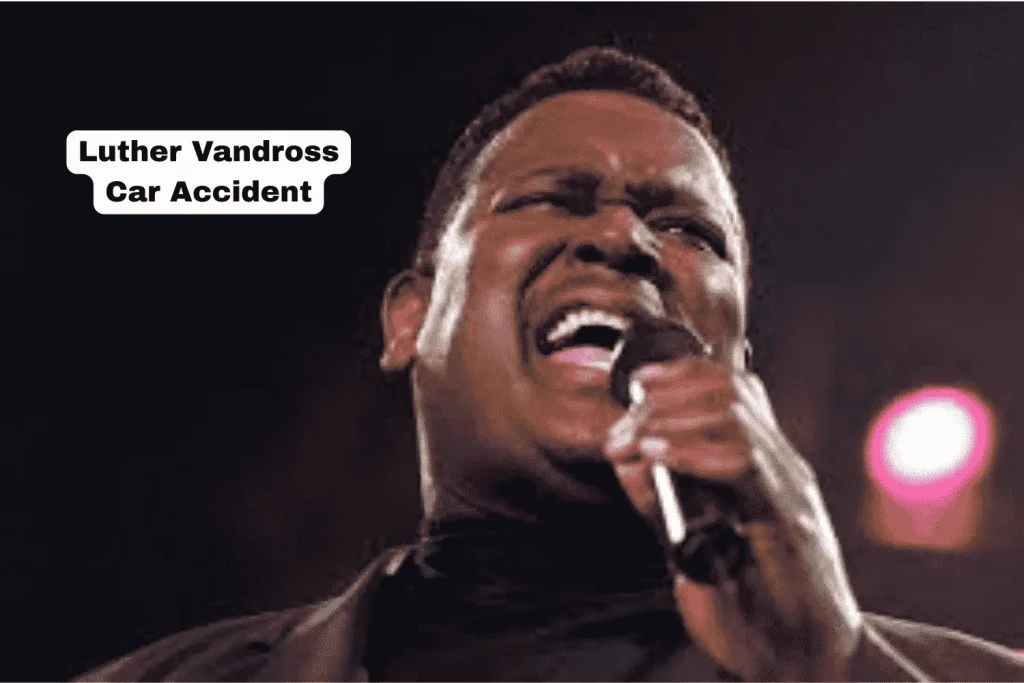
When the news first broke, the headline was blunt: a famous singer hurt in a car crash and a rider dead. Early reports focused on the shock value. Luther Vandross, then 34 and fresh off a Grammy nomination, had been badly injured. One of the passengers in his car had been killed. Several people in the other vehicles were also hurt.
What Early Reports Left Out
Those first articles painted a picture that was simple but incomplete. Readers saw phrases like “swerved out of control,” “three-car crash,” and “rider dies” without much context about the road, the speed, or the people in the other cars. The public was left with a mix of sympathy, curiosity, and judgment. Some saw it as a tragic accident; others quietly wondered whether fame would protect Luther from the kind of legal fallout an ordinary driver might face.
Police Details and Public Reaction
Police statements filled in some of the technical detail. Vandross had been driving above the posted limit on Laurel Canyon Boulevard, a route where a small mistake can turn into a serious impact. Investigators concluded that his car crossed into the wrong lane and triggered the chain of collisions. At the same time, hospitals released updates saying that he and several others were in “fair condition,” a phrase that sounds reassuring but still signals real trauma.
The contrast between Luther’s celebrity status and the loss of life made this story stand out. Fans knew him for smooth vocals and carefully crafted ballads, not for court dates or crash reports.
As happens in many public-figure incidents, the basic police facts quickly fed into emotional debates, gossip, and strong opinions about responsibility. If you have seen how coverage builds around events like the Glenn Renwick car accident news, you know that once a story like this hits, it rarely stays small.
Legal Aftermath: Charges, Lawsuit, and Settlement
The legal story that followed the crash was as important as the medical one. It decided how the law would treat a fatal accident caused by a well-known artist and set the official record of what Luther Vandross had done wrong behind the wheel.
Vehicular Manslaughter Recommendation and Reckless Driving Plea
After reviewing the scene, speed estimates, and the path of the vehicles, police recommended that Luther Vandross be charged with vehicular manslaughter. That recommendation rested mainly on one fact: he was driving too fast for the posted limit and the road conditions, and his car crossed the double yellow line into oncoming traffic.
However, there was also a key detail in his favor. Investigators found no evidence that he had been drinking or using drugs. This separated his case from many other fatal crashes where impairment plays a central role. In the end, Vandross did not go through a full trial on a manslaughter charge. Instead, he entered a plea of no contest to reckless driving, a serious offense but not as heavy as a felony conviction.
License Suspension and Legal Penalties
Even without a formal manslaughter conviction, the law still imposed penalties. Luther Vandross had his driver’s license suspended for a year. That may seem like a minor consequence compared to a life lost, but it was part of a legal package that recognized both his fault and the absence of alcohol or drugs.
You can think of the core legal outcome in simple terms:
| Legal Element | Outcome for Luther Vandross |
|---|---|
| Recommended charge | Vehicular manslaughter |
| Final plea | No contest to reckless driving |
| Evidence of alcohol/drugs | None reported |
| License status | Suspended for one year |
| Criminal label | Reckless driver, not a felon |
This result did not erase what happened, but it did define how the justice system viewed his actions: a serious mistake that caused a death, rooted in speed and control rather than intoxication.
The Salvemini Family’s Wrongful Death Lawsuit
At first, the Salvemini family was publicly supportive of Luther Vandross. He had believed in Jimmy’s talent, produced his album, and shared close personal and professional ties with the brothers. Grief, however, has many layers. As time passed, the family turned to the civil courts with a wrongful death lawsuit over Larry Salvemini’s death.
A wrongful death case is not about sending someone to jail. It is about asking whether a person’s actions created a preventable risk that led directly to a death, and what financial and symbolic compensation is fair. In this situation, Luther’s speed and loss of control became central again, this time in a civil courtroom instead of a criminal one.
Out-of-Court Settlement and the $630,000 Payment
Rather than pushing the case to a long public trial, both sides agreed to settle. Reports indicate that Luther Vandross paid around $630,000 to the Salvemini family. An out-of-court settlement doesn’t erase what happened, but it marked a point where the legal battle stopped and the harder personal healing had to continue.
For the family, it wasn’t a victory, just a way to get some stability and step out of the spotlight. In serious car accident cases involving public figures, settlements like this try to balance accountability, privacy, and practicality. Money can’t bring someone back, but it can quietly support the people left behind.
Explaining the Luther Vandross Stroke Incident and Health Struggles
Many people quietly assume that Luther Vandross died from the same car accident that killed Larry Salvemini. The truth is more complicated and, in some ways, more painful. Nearly two decades after the 1986 crash, Luther faced a different kind of crisis—one that started not on the road, but in his own body.
In April 2003, Vandross suffered a severe stroke at his home in New York. He slipped into a coma and spent weeks in intensive care. Doctors treated him for complications like pneumonia and meningitis, and he needed speech therapy and physical rehabilitation when he finally woke up. Fans who had only ever seen him as strong and polished suddenly had to face the idea that their hero was fighting to speak, walk, and breathe without help.
A quick timeline helps separate the events that people often blend together:
| Year | Event |
|---|---|
| 1986 | Laurel Canyon car accident; Larry dies |
| 2003 | Luther suffers a major stroke in New York |
| 2005 | Luther dies from stroke-related issues |
The stroke did not come out of nowhere. Luther had long struggled with high blood pressure, diabetes, and weight. He spoke openly about dieting, gaining the weight back, and the pressure of performing while trying to stay healthy. These long-term conditions quietly built up risk until his body could no longer keep up.
How Illness Changed His Career and the Way Fans Remember Him
Before the stroke, Luther Vandross was known for flawless live performances and a constant presence on stage and TV. After 2003, his world shrank to hospital rooms, rehab centers, and quiet spaces with family and close friends.
His final album, Dance with My Father, became both a comeback and a farewell. Recorded before the stroke but released around the same time, it won major awards and reminded the world how powerful his voice really was.
Many listeners didn’t realize they were hearing the closing chapter of a long career. While millions celebrated his Grammys, Luther was in the background fighting to recover basic abilities most people take for granted.
This mix of public success and private struggle is not unique to Luther. Public figures caught in accidents or medical emergencies often live through two stories at once: the official news report and the quieter, more human aftermath. You can see the same pattern in the way the media has covered situations like the Keir Starmer wife accident story and sensitive pieces such as Martin Clunes’ family accident coverage, where headlines rarely show the full emotional cost to the people involved.
How the Stroke Turned into a Luther Vandross Car Accident Rumor
So where did the idea come from that Luther Vandross died in a car crash? Part of it is simple confusion. Fans remembered the 1986 accident, heard that he was in a coma years later, and connected the dots in the wrong order. For people who loved his music from a distance, those mixed-up memories gradually hardened into “fact.”
Another part comes from the way online rumors grow. Short posts, quick comments, and recycled headlines can turn an old crash into a supposed “cause of death” in a matter of days. Once a dramatic version of the story appears, it tends to spread faster than the careful, accurate one.
Some forums and gossip spaces kept repeating the phrase “Luther Vandross car accident death” without ever checking the record. Official sources have always been clear that he died in 2005 from complications of a stroke, not from the 1986 collision. For his legacy—and for the people who lived through both events—getting that detail right really matters.
This is not unique to him. Misleading or incomplete stories also appear around sports and broadcasting figures, as seen in careful pieces that unpack the facts behind Al Michaels’ wife accident reports. In every case, the lesson is the same: check what actually happened before you accept a dramatic headline as truth.
Final Words
When you step back, Luther Vandross’s story carries two clear lessons. The first is about driving: one night of speeding on a narrow road cost a man his life, left others hurt, and stayed on Luther’s conscience for years. Those “small” details—speed limits, lanes, paying full attention—are really the line between getting home safe and never making it there.
The second lesson is about health. Luther survived the crash, but long-term issues like hypertension and diabetes led to the stroke he couldn’t fully come back from. Taking care of your body, even when life is busy, matters more than most of us like to admit.
In the end, Luther Vandross did not die in a car accident. He lived through Laurel Canyon, carried the weight of that night, and later faced a different battle in a hospital bed. Remembering what really happened honors both his music and the people whose lives changed forever in 1986.