How Comparative Fault Works in Missouri Accidents
Missouri is a busy place to drive. From the winding rural roads near the Ozarks to packed highways like I-70 through Kansas City and I-44 near St. Louis, accidents happen more often than people think. The Missouri Department of Transportation reported more than 900 crash-related fatalities in 2023 alone. Many of those wrecks involved excessive speed, distraction, or adverse weather conditions.
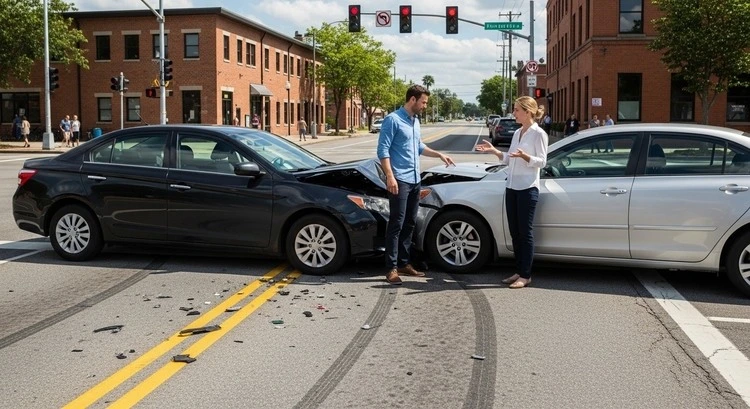
The state follows what’s called pure comparative fault. Basically, it means you can still recover money after an accident, even if some of it was your fault. If you’ve been hurt after a car accident, understanding how comparative fault works can make a big difference. It determines how much compensation you’ll actually get, even when someone else was mostly to blame.
Breaking Down Comparative Fault
Comparative fault, also known as comparative negligence, means that both sides share some portion of the blame. Each party’s responsibility is measured in percentages.
Here’s a simple example. You’re driving through an intersection, and another driver runs a red light. They clearly messed up — but you were also going a little too fast. A court might say they’re 80% at fault and you’re 20%. If your total damages were $50,000, you’d still get $40,000.
That’s what makes Missouri’s law a bit unique. Even if you were mostly at fault — 60%, 70%, even 99% — you can still recover something. Most other states cut you off completely once you pass 50% fault. Missouri doesn’t. It’s one of the few states that believes responsibility isn’t an all-or-nothing proposition.
How Fault Gets Decided
Determining who’s at fault isn’t guesswork. It comes down to evidence, and a lot of it. Insurance adjusters, lawyers, and sometimes juries look at:
- Police reports from the scene.
- Statements from witnesses
- Photos and dashcam footage
- Expert reports on how the crash happened
It’s not unusual for people to argue about percentages. The insurance company might claim you’re more at fault to reduce what they owe. That’s one reason accident victims often end up fighting over what really happened, not just who got hurt.
When Both Parties Share the Blame
There are numerous scenarios where both parties share some fault. A few common ones:
- Rear-end collisions: The driver behind you hits your car, but you stop suddenly without signaling.
- Left-turn accidents: You misjudged the distance, but the oncoming driver was speeding.
- Multi-vehicle crashes: Everyone points fingers, and fault gets divided several ways.
- Pedestrian cases: A driver might be speeding, but a pedestrian could be crossing where they shouldn’t.
In each case, the smallest detail — such as whether you used your blinker or looked down at your phone — can shift the percentage of fault.
Why Comparative Fault Affects Settlements
When you’re negotiating with an insurance company, comparative fault is always in the background. It’s their best tool to lower what they pay. The adjuster will dig through every part of your story to find something — anything — that suggests you share some blame.
That’s why you need to gather as much evidence as you can after a crash. Here’s what helps:
- Photos and videos of the scene
- Contact info from witnesses
- Immediate medical records
- Proof of lost income or repairs
The clearer your evidence, the harder it is for them to twist the story.
Understanding Missouri’s Pure Comparative Fault
Missouri’s pure comparative fault system gives everyone a chance to recover, but it also complicates matters. It’s fair, but it requires proof. If the other driver says you were 40% at fault and you say 10%, that difference can mean thousands of dollars.
Other states use stricter versions — if you’re more than half to blame, you get nothing. Missouri doesn’t do that. Even if you were mostly at fault, you can still walk away with something. It’s one of those laws that attempts to strike a balance between fairness and responsibility.
Key Takeaways
- Missouri uses a pure comparative fault system.
- You can recover damages even if you’re mostly at fault.
- Your payout gets reduced by your share of fault.
- Insurance companies often exaggerate your responsibility.
- Strong evidence helps protect your compensation.
Understanding how comparative fault works in Missouri gives you a clearer picture of what happens after a crash — and why proving your side of the story matters just as much as the crash itself.